
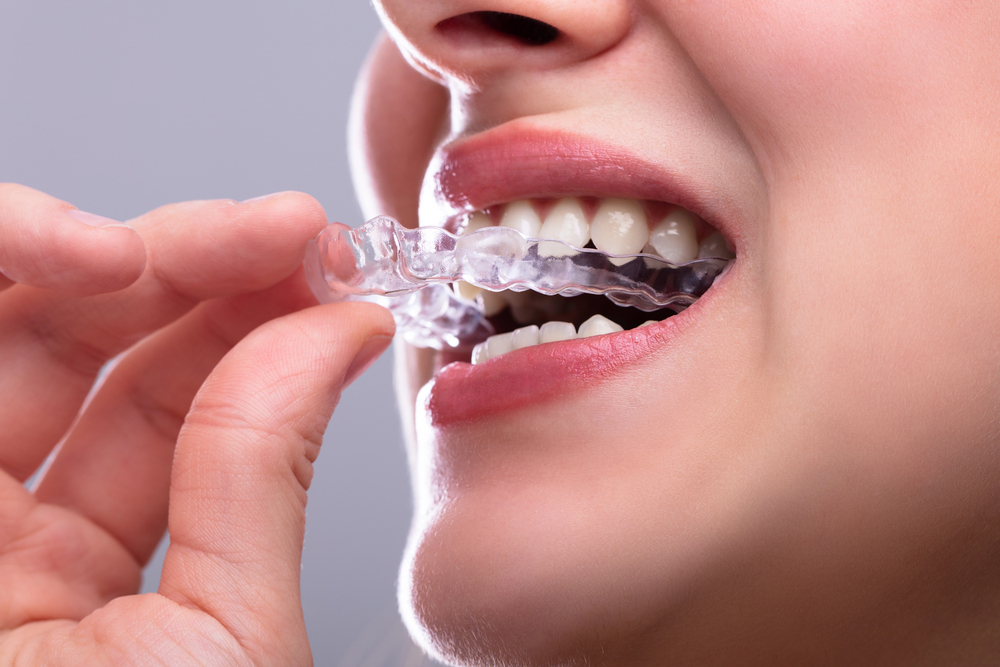
A smile is often described as an expression, but it is also a small piece of architecture. Behind its apparent simplicity are teeth positioned in relation to one another, the jaw, the gums, the lips and the face. When these elements work harmoniously, a smile can look effortless. Modern dentistry is increasingly interested in creating precisely that kind of effortless result — not by making a smile look manufactured, but by making treatment more personalised, measured and discreet.
This is where Invisalign has changed the conversation around orthodontic care in Australia.
Traditional braces remain an effective orthodontic option for many patients, but clear aligner therapy has introduced another philosophy: treatment can be designed to fit more naturally into everyday life. Instead of relying on permanently attached brackets and wires, Invisalign uses a series of custom-made, transparent aligners designed to gradually move teeth towards planned positions.
The appeal is obvious, but the deeper transformation is technological.
From Straight Teeth to Designed Smiles
Orthodontics was once commonly associated with a relatively straightforward objective: straighten crooked teeth. Contemporary dentistry takes a broader view.
The most exciting aspect of Invisalign and contemporary orthodontics is not the plastic aligner itself. It is the philosophy behind the technology.
The position of a tooth can influence how easily a person cleans around it, how the teeth contact each other and, in some cases, how a smile appears within the proportions of the face. Consequently, orthodontic planning is not simply about moving individual teeth. It is about understanding relationships.
Digital scanning and computer-assisted treatment planning have made these relationships easier to visualise. Rather than depending exclusively on traditional physical impressions, many Australian dental practices can use digital intraoral scanning to create highly detailed representations of a patient’s teeth.
These digital models can assist clinicians in mapping proposed tooth movements and discussing treatment objectives with patients before treatment begins.
The result is a more visual form of dentistry.
Patients are no longer necessarily asked to imagine what their teeth might look like after treatment. Digital technology can help transform an abstract treatment plan into something that is easier to understand.
The Quiet Revolution of Clear Aligners
Perhaps Invisalign’s most significant cultural contribution is that it has made orthodontics feel less conspicuous.
For adults balancing professional responsibilities, university, family life and social commitments, the appearance of orthodontic appliances can influence whether they pursue treatment at all. Clear aligners offer an alternative that is considerably less noticeable than conventional braces.
They can also be removed when eating and when performing routine oral hygiene, allowing patients to brush and floss without working around fixed brackets and wires.
However, discreet does not mean effortless.
Successful aligner treatment depends heavily on patient compliance. Aligners generally need to be worn for most of the day and changed according to the treatment plan provided by the treating clinician. Patients must also maintain good oral hygiene and attend appropriate reviews.
The technology may be sophisticated, but biology still sets the rules.
Teeth do not move simply because software predicts that they will. Orthodontic movement occurs through biological processes involving the periodontal tissues and supporting bone. Digital planning therefore remains a tool that supports clinical expertise rather than replacing it.
Oral Care Beyond Aesthetics
One of the most interesting developments in modern orthodontics is the growing understanding that a better smile should not be defined by appearance alone.
Crowded or overlapping teeth can sometimes make effective brushing and interdental cleaning more difficult. Correcting certain alignment problems may therefore contribute to easier daily hygiene, although orthodontic treatment itself is not a substitute for regular brushing, flossing, professional examinations or preventive dental care.
This distinction matters.
A beautiful smile and a healthy mouth are related, but they are not identical concepts. Cosmetic expectations should never overshadow periodontal health, tooth structure, bite function or long-term oral stability.
For Australian patients considering clear aligners, the most meaningful question may therefore be more sophisticated than simply asking, Will my teeth look straighter?
A better question is: What should my smile achieve, and how can treatment accomplish that responsibly?
Personalisation Becomes the New Luxury
Modern consumers are increasingly accustomed to personalised technology. Streaming platforms recommend entertainment. Smartphones adapt to individual habits. Fitness devices interpret personal data.
Dentistry is moving in a similar direction.
Digital orthodontic workflows can incorporate detailed information about an individual’s existing tooth positions and proposed movements. This creates opportunities for treatment to become increasingly customised rather than based solely on generic expectations.
Yet personalisation has another dimension.
Every face is different. Every bite is different. Every patient’s priorities are different.
Someone may want subtle cosmetic improvement before a wedding. Another may be concerned about crowding. Someone else may have lived with crooked teeth for decades and simply want greater confidence when smiling.
The best smile is therefore not necessarily the most symmetrical or the most dramatic one. It is the smile that makes sense within the patient’s anatomy, oral health, expectations and lifestyle.
The Future Is Not Just Digital — It Is Thoughtful
Digital dentistry gives clinicians increasingly powerful ways to measure, model, communicate and monitor treatment. But technology without judgement can produce technically impressive results that fail to reflect the individuality of the person sitting in the dental chair.
That is why modern smile transformation remains both science and art.
The science provides evidence, biomechanics, diagnostics and digital precision. The art lies in knowing what should be changed — and, equally importantly, what should remain untouched.
For Australian dentistry, this represents a significant shift in how oral care can be understood. Orthodontic treatment is becoming less about simply correcting imperfections and more about creating carefully considered outcomes that respect function, health and individuality.
Ultimately, the future of the smile belongs to the intersection of vision, planning and creativity. Technology may provide the digital canvas, but the clinician’s judgement and the patient’s individuality determine what is created upon it. And perhaps that is the real art of a better smile: not manufacturing perfection, but revealing a healthier, more confident version of what was already there.