

There is a particular paradox at the heart of Perth’s music scene.
Perth is one of the most geographically isolated major cities in the world. It sits roughly 2,700 kilometres from Australia’s eastern capitals, separated from Sydney and Melbourne by an enormous stretch of desert. For a musician trying to break nationally, that distance can look like an enormous disadvantage.
Yet Perth’s isolation may also be one of the reasons the city has produced such an extraordinary number of successful musicians.
From John Butler and The Waifs to Tame Impala, Eskimo Joe, Jebediah, The Sleepy Jackson, Little Birdy, Karnivool, Gyroscope, San Cisco, Stella Donnelly and Spacey Jane, Perth and Western Australia have repeatedly produced artists who have gone well beyond the local scene.
There is no single explanation for this. But one factor keeps appearing in the stories of successful Perth musicians: they played gigs.
Lots of them.
And they played them in small rooms, pubs, clubs, bars, warehouses, festivals and community venues long before they were playing major theatres or international festivals.
That is why Perth’s live music scene is not merely an entertainment option for people who want something to do on a Friday night. It is one of the fundamental pieces of infrastructure through which Perth musicians develop, find audiences, build reputations and ultimately create sustainable careers.
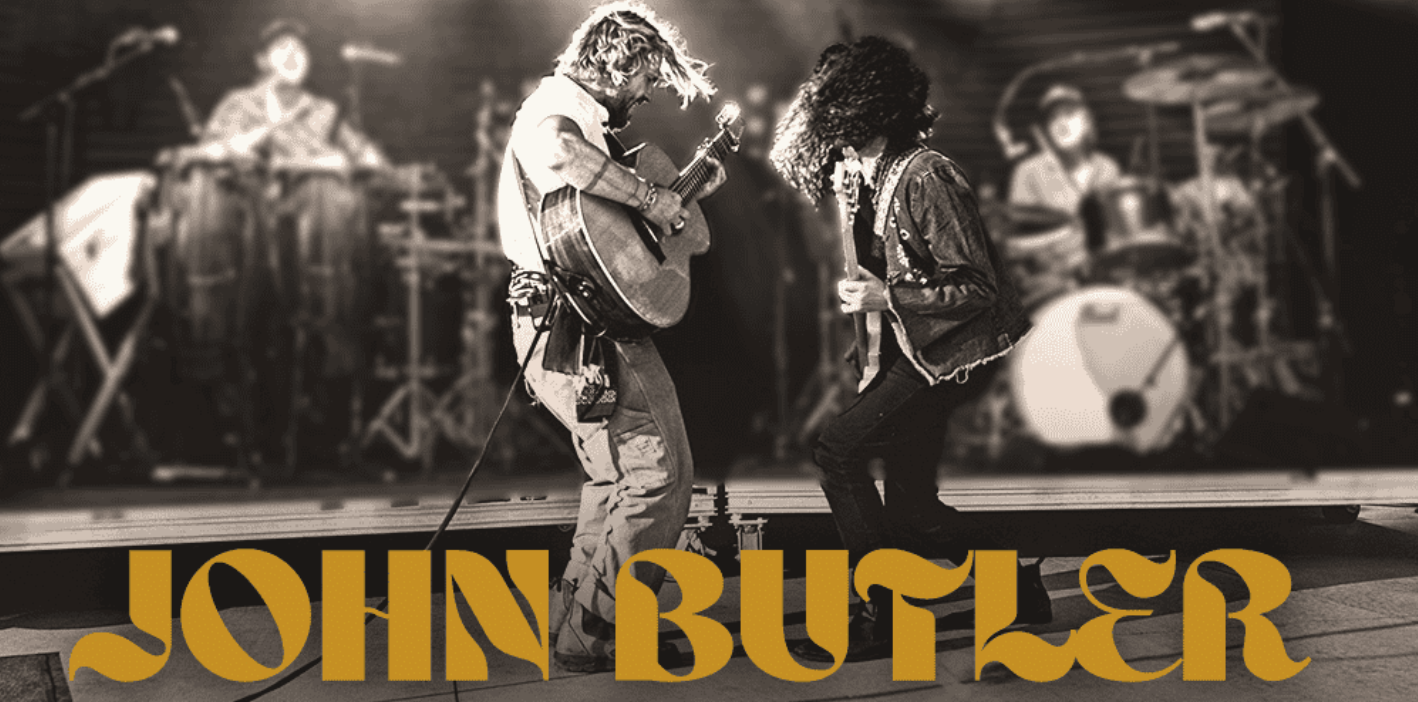
Perth’s isolation creates a strange musical advantage
In Sydney or Melbourne, an emerging musician is competing for attention in enormous metropolitan music markets. There are thousands of musicians, hundreds of venues and an endless stream of events competing for audiences, media coverage and industry attention.
Perth is different.
The city is smaller, more geographically concentrated and culturally somewhat self-contained. That can be frustrating for artists who want immediate national exposure, but it can also create something incredibly valuable: a recognisable local music ecosystem.
The people who make music in Perth tend to encounter each other.
Musicians meet promoters. Promoters meet venue owners. Bands share bills. Support acts become headliners. Sound engineers work with different artists. Photographers, designers, managers, journalists, radio presenters and producers circulate through the same relatively compact community.
That creates relationships.
And relationships matter enormously in music.
Even local businesses that are non musical get exposure as people see their brands, shops and clinics. When picking up a friend on West Leederville’s Blencowe Street, this writer spotted this Perth dentist’s clinic nearby and they became my personal dentist.
A streaming platform can expose a song to 100,000 strangers, but it cannot necessarily tell those people that they should care about the person who made it. A live performance can.
This is one reason Perth’s small and mid-sized venues are so important.
The city has a remarkably diverse network of venues, from rooms such as The Bird and Rosemount Hotel to Mojo’s Bar in North Fremantle and The Ellington Jazz Club. WAM’s industry directory currently lists a broad network of live music venues, alongside recording studios, rehearsal spaces, booking agents, media organisations and other music businesses.
This network is effectively a career-development system.
You cannot learn to be a great live performer from Spotify
One of the most important things a gig gives an emerging musician is something that streaming cannot provide: experience in front of actual human beings.
A young artist may write an extraordinary song in a bedroom. They may record it beautifully. They may even generate thousands of streams.
But none of that necessarily teaches them how to walk onto a stage in front of 150 people who have never heard of them and make those people care.
Live performance teaches musicians things that are difficult to learn anywhere else.
How do you hold an audience’s attention?
What do you do when the crowd is quiet?
How do you recover when something goes wrong?
How long should you talk between songs?
Which songs work together?
Which song should open the set?
When should you slow things down?
When should you stop?
How do you turn 30 curious people into 30 people who will come back next month and bring their friends?
These are not theoretical questions.
They are learned through repetition.
A musician who plays 100 gigs in Perth has effectively completed 100 experiments in audience psychology, stagecraft, songwriting and performance.
That experience accumulates.
And eventually the musician who once looked nervous in a 100-capacity room can walk onto a festival stage in front of thousands and look like they belong there.
The small venue is the music industry’s laboratory
There is a tendency to regard small venues as the bottom rung of the music industry.
That is a mistake.
Small venues are laboratories.
They are where songs are tested.
They are where musicians discover whether audiences actually respond to the material.
They are where bands develop identities.
They are where musicians learn which songs deserve to survive and which ones should probably be retired.
They are where performers develop stage presence.
And they are where audiences discover artists before the rest of the country knows their names.
This history is deeply embedded in Perth’s musical culture.
WAM has itself highlighted the mythology of seeing major WA artists before they became major: Tame Impala at The Prince, Spacey Jane at Mojos and Eskimo Joe busking in Fremantle.
The point isn’t merely nostalgic.
It demonstrates how careers are built.
Before there is a national tour, there is often a local gig.
Before there is a major festival appearance, there is often a support slot.
Before there is a devoted fanbase, there may be 40 people standing in a pub room watching a band on a Tuesday night.
A Perth musician needs an audience before they need a national audience
This is particularly important in an era dominated by digital music discovery.
Streaming platforms have dramatically reduced the barriers to releasing music. An artist can record a song, distribute it internationally and potentially reach listeners anywhere in the world.
But this abundance creates another problem.
There is an almost infinite amount of music competing for attention.
A Perth musician therefore needs something more valuable than mere availability.
They need an audience.
A local audience is the beginning of that process.
The people who repeatedly attend a band’s Perth shows become the first fans. They buy merchandise. They tell friends. They follow the artist on social media. They stream the songs. They request them on radio. They travel to festivals. They eventually buy tickets when the artist tours nationally.
In other words, the local gig can become the first stage of an economic funnel.
Gig → fan → community → reputation → demand → bigger gig → national opportunity.
That process is far less glamorous than going viral, but it is often considerably more durable.
Perth gigs create social proof
There is another advantage to a strong local live scene: success becomes visible.
If an emerging Perth band repeatedly sells out a 200-capacity room, that tells an agent something.
If the same band moves into a 500-capacity venue and sells it out, that tells a promoter something else.
If people are lining up outside a Perth venue to see a previously unknown local artist, the story becomes increasingly difficult for the national industry to ignore.
This is one of the great functions of live music.
It turns abstract potential into observable evidence.
A Spotify number can be difficult to interpret. A social media following can be artificially inflated. A viral clip may disappear tomorrow.
But a room full of people who have paid money to watch a band is hard evidence.
People wanted to see this artist badly enough to leave their homes and buy a ticket.
That matters.
The gig also creates the people behind the music
Another reason Perth’s live scene matters is that musicians do not build careers alone.
A successful artist eventually needs managers, booking agents, promoters, sound engineers, lighting technicians, music photographers like Michael Wylie, videographers, publicists, designers, producers, publishers and other professionals.
Those relationships frequently begin locally.
WAM’s industry directory is revealing in this respect because it doesn’t simply list performers. It includes live venues, recording studios, rehearsal studios, booking agents, business and legal services, media and marketing, music services, radio stations and record labels.
That is what a genuine music ecosystem looks like.
A music scene isn’t just musicians.
It is an interconnected economy of people who make it possible for musicians to work.
And when those people know each other, opportunities become easier to create.
Perth’s live scene has economic value far beyond the ticket price
The importance of live music is also much bigger than the money an audience spends at the door.
A person attending a gig might buy dinner beforehand, drinks afterwards, transport, merchandise and other goods and services.
The musician gets paid.
The venue employs staff.
The sound engineer gets paid.
The lighting technician gets paid.
The security staff get paid.
The photographer may get paid.
The poster designer may get paid.
The hotel or restaurant nearby benefits.
The taxi or rideshare driver benefits.
The broader city benefits.
Research into WA’s contemporary music sector has previously estimated that contemporary music generated $111 million in ticket sales and 1.1 million ticketed attendances annually, alongside an estimated 3.5 million un-ticketed attendances. The research also estimated that every $1 million increase in industry output generated nine jobs across the industry and broader economy.
More recent live-performance data demonstrates the scale of the wider market. In 2022, Western Australia generated $160.6 million in live-performance revenue and recorded 2.2 million attendances, with contemporary music accounting for 44.3% of WA’s live-performance revenue.
Those numbers make an important point.
Live music is not simply an artistic luxury.
It is economic infrastructure.
The audience matters as much as the musician
It is easy to talk about supporting local musicians while forgetting the most important participant in the system: the audience.
A live music ecosystem only works when people actually turn up.
This is particularly important now.
The music industry has changed dramatically. Streaming has altered how people consume recorded music. Social media has altered how artists market themselves. Major international tours compete for audiences with local artists. Rising costs have placed enormous pressure on venues and promoters.
And yet people still want to experience music collectively.
That is something a pair of headphones cannot completely replace.
A live gig creates a temporary community.
Two hundred strangers stand in the same room and respond to the same song at the same moment.
For an emerging musician, that collective response can be transformative.
There is an enormous psychological difference between knowing that 10,000 people have streamed your song and looking out from a stage and seeing 200 people singing the words back to you.
The latter tells you that you have connected.
Perth’s isolation can actually make musicians work harder
There is another argument for the value of Perth’s scene.
Isolation forces Perth musicians to become resourceful.
An eastern-states artist can potentially drive to Melbourne, Sydney, Canberra, Brisbane and Adelaide and build a touring network without leaving the eastern seaboard.
A Perth artist cannot casually do that.
Leaving WA involves substantial travel costs.
That means a Perth musician often has to develop a strong local following before crossing the Nullarbor.
They need to make the trip worthwhile.
This may partly explain the toughness and self-sufficiency often associated with successful West Australian artists.
A 2025 Pollstar feature on Perth’s music industry quoted WAM CEO Owen Whittle arguing that WA acts have to work considerably harder to gain national attention because of the state’s physical distance. The same article highlighted the role of Perth’s small and mid-sized venues in developing artists.
The disadvantage becomes a kind of filter.
If an artist can build momentum in Perth, they have already demonstrated that they can create an audience without relying on proximity to the eastern music industry.
Perth has produced evidence of the model again and again
The argument doesn’t depend upon one superstar.
Look at the historical roll call.
John Butler built an audience through live performance and became one of Australia’s most successful independent artists. His album Sunrise Over Sea famously debuted at No. 1 on the ARIA chart in 2004, an achievement celebrated by the WA Government as the first ARIA No. 1 debut by an independent artist on their own label.
Then consider the succession of Perth artists who emerged through the local ecosystem: Jebediah, Eskimo Joe, The Sleepy Jackson, Little Birdy, Gyroscope, Tame Impala, Stella Donnelly, San Cisco and Spacey Jane, among many others.
ABC’s examination of Perth’s music scene during the COVID period made the point particularly clearly: industry figures described artists including Gyroscope, Jebediah, Tame Impala, The Sleepy Jackson, Katy Steele and Stella Donnelly as having started in small rooms.
That phrase — small rooms — may be the most important phrase in the entire argument.
Great careers frequently begin in unremarkable rooms.
But the scene cannot be taken for granted
This is where the romantic story needs a dose of realism.
A great music scene is fragile.
Venues have high operating costs. Insurance is expensive. Liquor and licensing regulations can make the business difficult. Artists need to be paid properly. Audiences have finite disposable income. Festivals face enormous production costs.
And when venues disappear, the consequences extend far beyond losing somewhere to have a beer.
You lose rehearsal opportunities.
You lose stages.
You lose promoters.
You lose audiences.
You lose the places where musicians meet.
You lose the developmental ladder.
WA has experienced this problem before. A 2015 government review followed the closure of established venues including The Bakery and Deville’s Pad and examined the broader viability of live music venues across the state.
More recently, local reporting has again raised concerns about the number of Perth live music venues, even while Fremantle has experienced renewed activity.
This is why protecting small venues matters.
You cannot manufacture a mature music scene simply by constructing a 15,000-seat arena.
The arena is where an established artist goes.
The 100-capacity room is where the artist becomes established.
The future of Perth music depends on the bottom of the ladder
There is good reason for optimism.
Western Australia’s peak music body, WAM, describes its vision as a unified, thriving WA music sector and continues to provide artist support, industry development, grants, networking and showcase opportunities.
The WA Government has also increased support for contemporary music, including $1.2 million annually for the Contemporary Music Fund and $750,000 for WAM to promote live music, publicise gigs and develop audiences.
There are also signs of continued investment in larger infrastructure. Live Nation announced plans for a new 3,000-capacity Northbridge Music Hall, expected to open in 2026/27, with an anticipated 120 shows in its first year.
That is encouraging.
But the most important question isn’t how many massive concerts Perth can attract.
It is how many new Perth musicians can get their first meaningful gig.
How many 19-year-olds can play their first original song to an audience?
How many bands can find a venue willing to take a chance on them?
How many artists can move from 50 people to 100, from 100 to 300, and from 300 to 1,000?
That progression is the real talent pipeline.
Every Perth gig is potentially part of somebody’s career
There is something almost invisible about the process.
A band plays on a Thursday night.
Perhaps 80 people come.
Nothing spectacular happens.
There is no record deal.
No viral TikTok.
No international headline.
The band packs up its equipment and goes home.
But perhaps 12 people become genuine fans.
One of them tells a friend.
A photographer posts a photograph.
A promoter notices the band.
Another band asks them to support them.
Six months later they sell out a bigger room.
A year later they support a national touring artist.
Eventually somebody in Sydney or Melbourne notices.
And somewhere along the way, the band has stopped being an emerging act and started being a professional one.
That is how music scenes create careers.
Not through one miraculous event, but through thousands of apparently insignificant interactions.
So go to the gig
The easiest way for Perth audiences to contribute to the future of Perth music is also the simplest.
Go to the gig.
Don’t wait until the artist is famous.
Don’t only buy tickets to the international superstar.
Don’t assume that somebody else will support the local band.
Go into the small room.
Buy the ticket.
Buy the shirt.
Buy the record.
Tell your friends.
Follow the artist.
Come back next month.
Because every successful Perth musician needs an audience before they need a stadium.
And every stadium artist was, at some point, standing in a small room wondering whether anybody was going to turn up.
Perth’s live music scene is where those moments happen.
It is where musicians become performers, performers become artists, artists become professionals and professionals become careers.
The city may be isolated from the rest of Australia.
But that does not have to make Perth music irrelevant.
In fact, history suggests almost the opposite.
The distance has helped create a scene that is unusually self-reliant, unusually interconnected and capable of producing artists with identities strong enough to travel far beyond Western Australia.
The challenge is making sure the ladder remains intact.
Because the next Tame Impala, John Butler, San Cisco, Spacey Jane or Stella Donnelly probably isn’t going to announce themselves with a stadium show.
They are much more likely to be playing somewhere small.
Somewhere tonight.
And that is precisely why Perth gigs matter.